1. When Efficiency Gains Introduce New Risks
In modern manufacturing, industrial motors rarely stop. From automated production lines to heavy-duty compressors, many systems operate continuously under 24/7 conditions. The adoption of variable frequency drives (VFDs) has significantly improved energy efficiency and process control, but it has also introduced a less visible issue—shaft current in VFD industrial motors.In facilities such as automotive plants or continuous processing lines, these electrical effects don’t cause immediate failure. Instead, they accumulate silently, gradually reducing motor reliability over time.
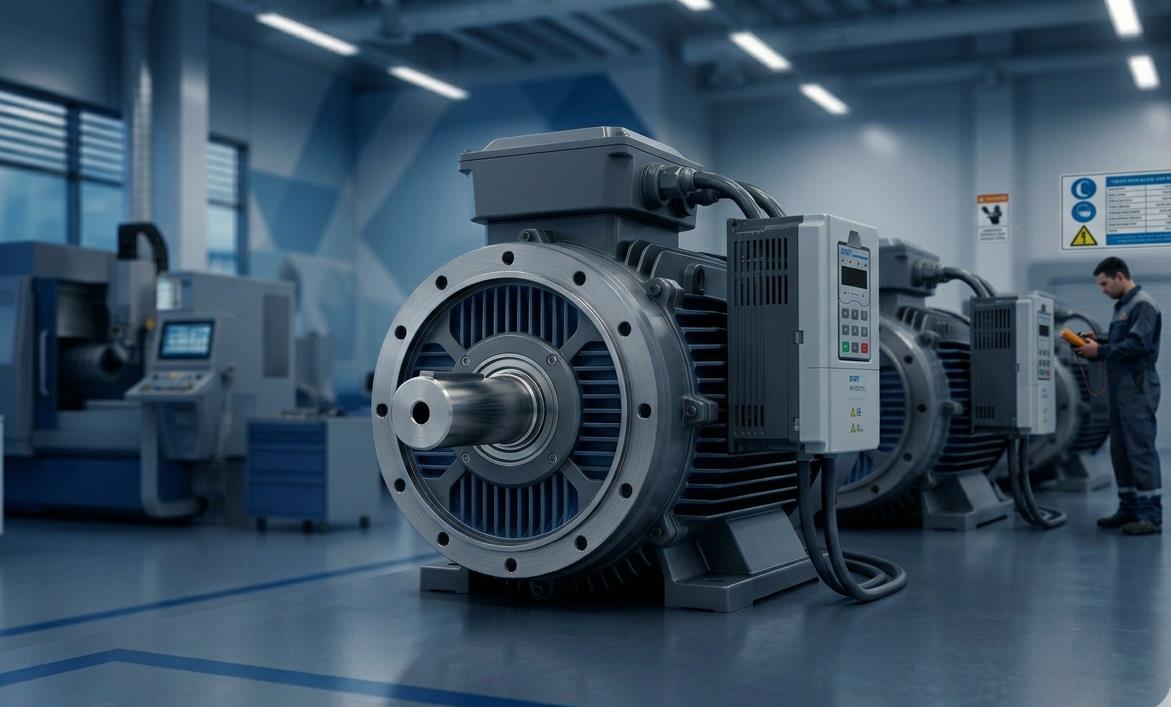
2. The Root Cause: Shaft Current and Bearing Electrical Damage
VFD-driven motors generate high-frequency voltage pulses, which create internal capacitance between the stator and rotor. This results in shaft voltage buildup, eventually discharging through the bearings.This process, often referred to as bearing electrical erosion, causes microscopic pitting on the bearing surface. Unlike mechanical wear, this damage develops internally and can go unnoticed until vibration increases or noise becomes evident.
For operators, the result is clear: reduced motor lifespan and increased risk of unexpected failure.
3. Why It Becomes Costly in 24/7 Industrial Environments
In plants where motors run continuously, even minor bearing damage escalates quickly. A single failure can stop an entire production line, leading to unplanned downtime and immediate repair needs.In real-world scenarios—such as conveyor systems in logistics centers or pumps in chemical processing plants—unexpected shutdowns not only affect output but also disrupt scheduling and labor allocation. Over time, repeated failures increase maintenance cost, spare parts consumption, and operational uncertainty.
The challenge is no longer just fixing motors, but implementing a reliable motor protection solution that prevents failure at its source.
4. Limitations of Conventional Motor Protection Methods
Traditional approaches, including grounding brushes and insulated bearings, are often used to mitigate shaft current. However, in continuous-duty environments, their effectiveness is limited.Brushes wear down under constant contact and require regular replacement, while insulation solutions can degrade under heat, contamination, and vibration. As performance declines, protection becomes inconsistent—especially in high-load industrial applications.
5. Volsun Solution: A Reliable Shaft Grounding Approach
Volsun shaft grounding rings provide a stable and long-term solution by creating a continuous, low-resistance path for shaft current discharge. Installed directly on the motor shaft, they prevent electrical current from passing through the bearings, effectively eliminating the root cause of damage.With a dynamic resistance of ≤10Ω throughout its service life, Volsun’s solution ensures consistent performance in demanding environments such as manufacturing plants, processing facilities, and heavy-duty equipment systems.
Compared to traditional methods, Volsun grounding rings require minimal maintenance and are specifically designed for VFD motor protection in continuous operation.
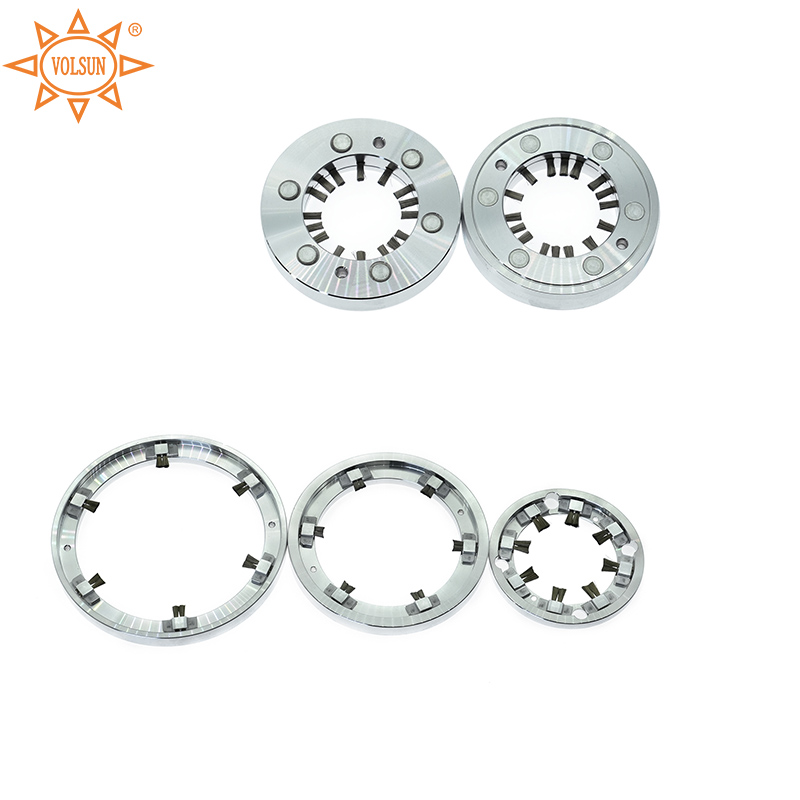
6. Designed for Efficiency and Continuous Operation
Beyond protection, the low-friction design minimizes drag torque, ensuring that the motor’s efficiency is not compromised. This is particularly important in high-speed or continuously running systems, where even small inefficiencies can accumulate into significant energy loss.7. Application Results: From Reactive Maintenance to Predictable Operation
In industrial environments such as wastewater treatment facilities and automated production lines, the impact of shaft grounding becomes increasingly visible over time. Motors equipped with Volsun shaft grounding rings show a marked reduction in bearing electrical damage, leading to longer service intervals.Maintenance teams can shift from reactive repairs to planned maintenance schedules, reducing emergency interventions and stabilizing operating costs. More importantly, production continuity improves, as unexpected shutdowns caused by bearing failure are significantly reduced.
For companies operating under 24/7 conditions, this translates into lower maintenance cost, extended motor lifespan, and improved system reliability.
As VFD technology becomes standard in industrial systems, managing shaft current is essential for long-term reliability. A well-designed shaft grounding solution not only prevents bearing failure but also reduces maintenance cost and supports continuous operation.
For customized shaft grounding solutions tailored to your industrial motor applications, contact Volsun for technical support and fast delivery.
FAQ
Q1: What is shaft current in VFD industrial motors?It is electrical current induced by high-frequency switching in VFD systems, which travels through the motor shaft and discharges via the bearings.
Q2: How does shaft current cause bearing failure?
It creates electrical erosion inside bearings, leading to surface pitting, increased vibration, and premature failure.
Q3: Why is this issue critical in 24/7 operations?
Continuous operation accelerates damage accumulation, increasing the frequency of failures and overall maintenance cost.
Q4: What is the best way to prevent bearing electrical damage?
Using a shaft grounding ring provides a direct discharge path, preventing current from passing through the bearings.
Q5: Why choose Volsun shaft grounding rings?
Volsun offers stable resistance performance, long service life, low maintenance requirements, and reliable protection for VFD-driven industrial motors.
- CONTACT TEL: +86-512-66386808
- SALES CONTACT: volsun2006@szvolsun.com