A cold shrink tube seals and protects cables without heat. If you're weighing cold shrink vs heat shrink, or choosing between a silicone and an EPDM cold shrink tube, this guide covers the basics and the real specs — so both buyers and engineers can pick the right one with confidence.
What Is a Cold Shrink Tube?
A cold shrink tube is a rubber sleeve that is stretched onto a removable plastic support core at the factory. Pull the core out and the tube shrinks onto the cable at room temperature — no torch, no heat gun, no open flame.
That single difference is why many teams now prefer it over heat shrink tubing: installation is faster, safer, and far more consistent, especially outdoors or near flammable equipment.
How It Installs (3 Steps, No Tools)
- Slide the pre-expanded tube onto the cable or joint.
- Pull the built-in support core out from one end.
- The rubber contracts to its natural shape and forms a tight, uniform seal.
EPDM or Silicone? Pick by the Job
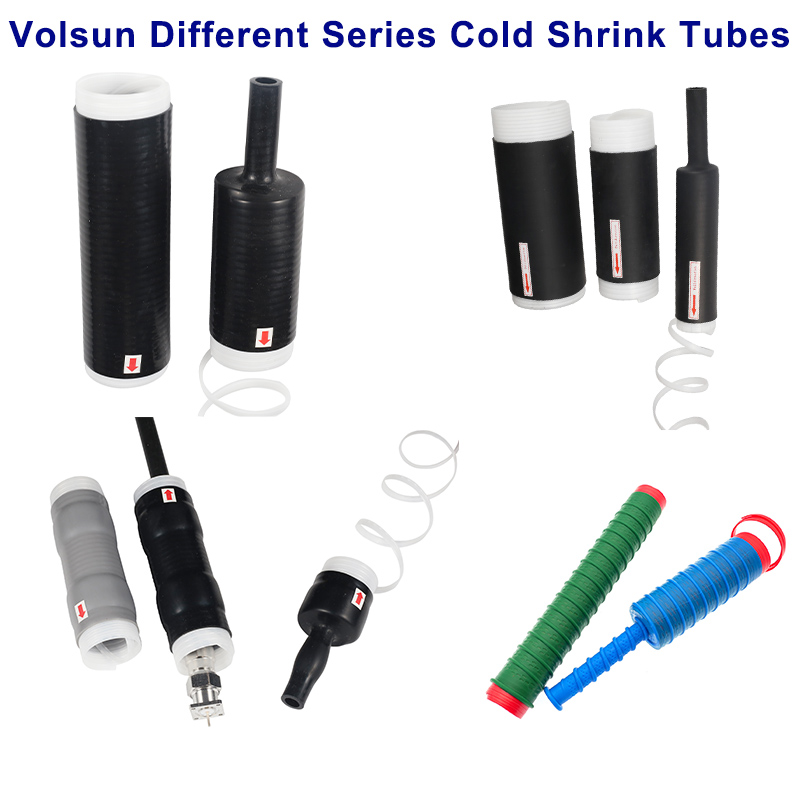
EPDM cold shrink tubes are tougher against puncture, abrasion and chemicals, and cost less. Silicone cold shrink tubes stay flexible over a much wider temperature range and seal better in wet, tight spaces (the mastic version). VOLSUN makes both, plus two specialized silicone builds.
VOLSUN Cold Shrink Product Line
| Product | Material | Best for | Temperature | Key specs | Color |
| RUBLS-EPDM | EPDM rubber | Low-voltage power (≤1 kV) & comms coax; abrasive / chemical sites | Outdoor-rated, weather / UV / acid-alkali resistant | Dielectric 15 kV/mm; tear ≥25 kN/m; Shore 45±5 | Black |
| RUBLS-SILIC (with Mastic) | Silicone + sealing mastic | Base-station & connector waterproofing | Validated −40 °C to +80 °C (harsh-env tests) | IP68; dielectric ≥18 kV/mm; ~4:1 shrink; RoHS / REACH | Gray / Black / other |
| RUBLS-SILIC (High-Expansion) | Silicone rubber | Telecom cable connector sealing waterproof | −60 °C to +200 °C continuous | IP67; dielectric ≥18 kV/mm; ~4:1 shrink; RoHS / REACH | Black / other colors |
| VS-RCST Anti-Slip | Silicone, embossed | Grip + sealing + color coding | −60 °C to +200 °C continuous | V-1 (UL-94); 9 grid patterns; 6 colors | Red / Blue / Green / White / Black / Orange |
Each line keeps its own dimensions and certifications — EPDM sizes run up to Φ155 mm, while the silicone lines cover cable outer diameters from about 6 mm to 70+ mm. Special sizes and packing are available on request across all lines.
Where They're Used
VOLSUN cold shrink tubes are used across telecom, power and industrial cable sealing. By line:
- RUBLS-EPDM: communication coaxial cables, low-voltage power cables (≤1 kV), overhead, underground and buried runs.
- RUBLS-SILIC with Mastic: antenna feeder lines, N-type / DIN / 4.3-10 connectors, CATV terminals — IP68 waterproofing in humid, foggy sites.
- RUBLS-SILIC High-Expansion: base-station jumpers, CATV and industrial connectors across a wide temperature span.
- VS-RCST Anti-Slip: parts that need a secure hand grip, color coding and moisture sealing in one piece.
How to Choose the Right Size
Match two numbers from the datasheet:
- Expanded (installed) ID must be larger than the cable's outside diameter.
- Recovered ID must be smaller than the cable OD so the tube grips firmly.
Why Specify VOLSUN
VOLSUN is a professional cold shrink tube manufacturer. Procurement and engineering teams choose us because we:
- Ship on time, even on custom orders
- Accept customization — size, material, color, mastic and printing
- Offer competitive pricing from direct factory supply
- Run strict incoming and outgoing QC on every batch
- Already supply top telecom operators and equipment brands
FAQ
Q1: What is the difference between cold shrink and heat shrink tubing?
Cold shrink contracts using the rubber's elastic memory when you remove a support core; heat shrink needs external heat to shrink. Cold shrink needs no tool and is safer near flammable equipment.
Q2: Can cold shrink tubes be used outdoors and in cold weather?
Yes. They install at room temperature with no heat, so they work in freezing conditions, and the EPDM and silicone grades resist weather, UV and ozone. Silicone versions are rated for continuous use from −60 °C.
Q3: Are cold shrink tubes reusable? No. Once the support core is removed the tube shrinks permanently. You can position it before pulling the core, but it cannot be re-expanded after activation.
Do you offer custom sizes and materials? Yes. VOLSUN accepts custom dimensions, materials (EPDM or silicone), mastic options, colors and printing.
- CONTACT TEL: +86-512-66386808
- SALES CONTACT: volsun2006@szvolsun.com