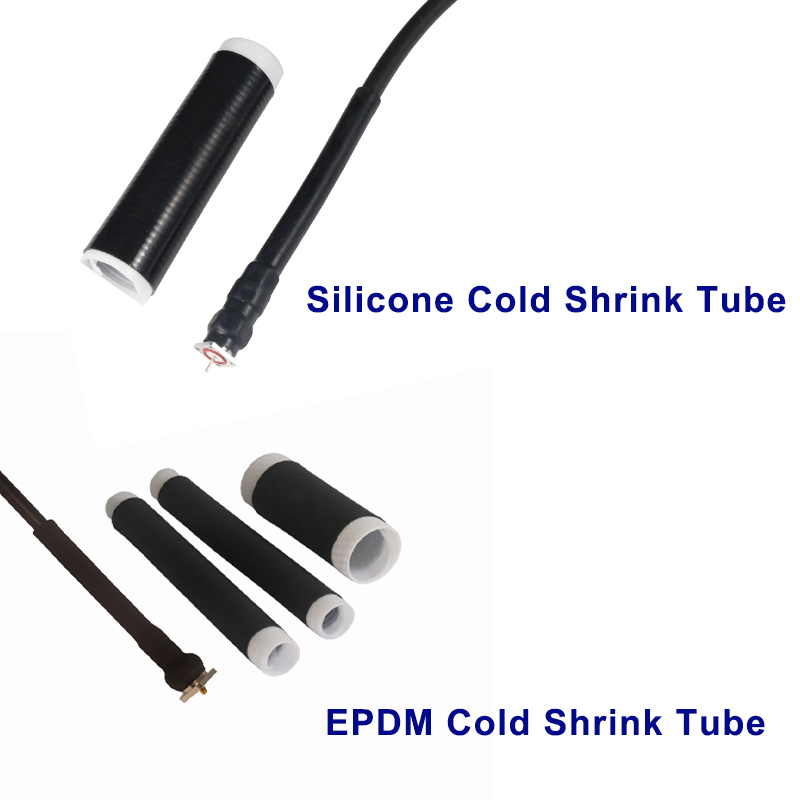
When you specify a cold shrink tube, the first material decision is silicone vs EPDM. Both are rubber sleeves that contract at room temperature when you pull the support core — no flame, no heat gun. The difference is what each rubber tolerates: EPDM is the tougher, more abrasion- and chemical-resistant workhorse; silicone stays flexible across a far wider temperature span and seals better in wet, tight spaces. Pick wrong and you either overpay or watch a seal crack in the cold. This guide compares the two so you can specify with confidence.
What Is EPDM Cold Shrink?
EPDM (ethylene propylene diene monomer) is a synthetic rubber valued for toughness. In a cold shrink tube it resists abrasion, chemicals, acids and alkalis, and holds up to years of UV and ozone outdoors. It is the default choice for general-purpose sealing because it balances toughness and chemical resistance without needing a mastic liner.What Is Silicone Cold Shrink?
Silicone rubber stays soft and elastic from deep cold well into high heat — far beyond EPDM's comfort zone. In its mastic-lined version it also forms a water-blocking layer, which makes it the go-to for connectors and junctions where moisture is the main enemy.When to Choose EPDM Cold Shrink Tube
Choose RUBLS-EPDM when the job is general-purpose and the site is rough: overhead and underground power runs, communication coax in abrasive or chemical environments, or any project where budget matters and the temperature stays moderate. It resists puncture and weathering without a premium price.When to Choose Silicone Cold Shrink
Choose silicone when temperature or water drives the spec:- Wide temperature swing — RUBLS-SILIC High-Expansion runs −60 °C to +200 °C, ideal for telecom and industrial sites with hot equipment and freezing winters.
- Connector and junction sealing — RUBLS-SILIC with Mastic adds a sealing layer and is validated −40 °C to +80 °C with IP68 on a qualified assembly.
- Tight, wet spaces — silicone conforms to irregular shapes where a mastic liner locks out water.
VOLSUN Product Match
VOLSUN makes both, so you are not locked to one chemistry:- RUBLS-EPDM — tough, chemical-resistant, cost-effective; ≤1 kV power and comms coax.
- RUBLS-SILIC with Mastic — silicone + mastic, IP68 on a qualified assembly, dielectric ≥18 kV/mm, ~4:1 shrink.
- RUBLS-SILIC High-Expansion — −60 °C to +200 °C, for wide-temperature telecom/industrial use.
- VS-RCST Anti-Slip — embossed silicone for grip + color coding + sealing.
Bottom Line
Default to EPDM for tough, moderate-temperature jobs where abrasion and chemical resistance matter most. Reach for silicone when cold, heat, or water is the deciding factor. Need help matching chemistry to your site? Contact the VOLSUN team for a sample or datasheet.- CONTACT TEL: +86-512-66386808
- SALES CONTACT: volsun2006@szvolsun.com